Select the painting to see it full screen and zoom in.
What the painting shows
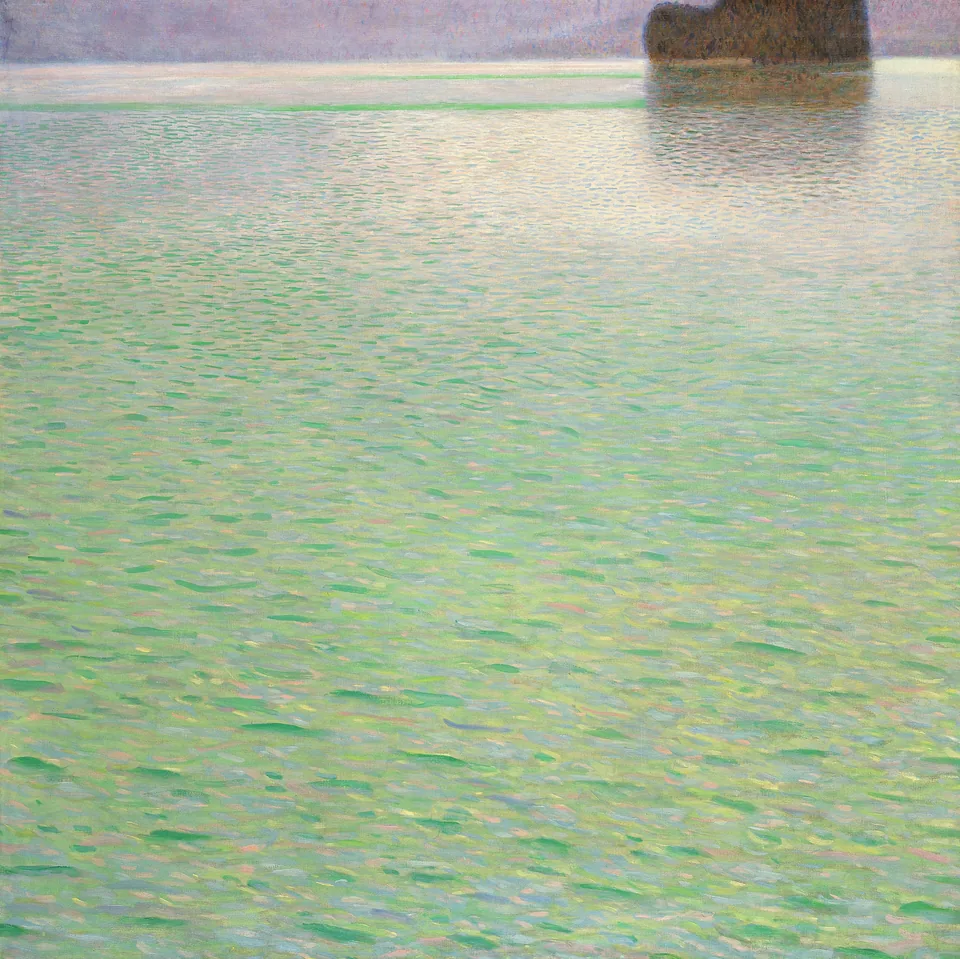
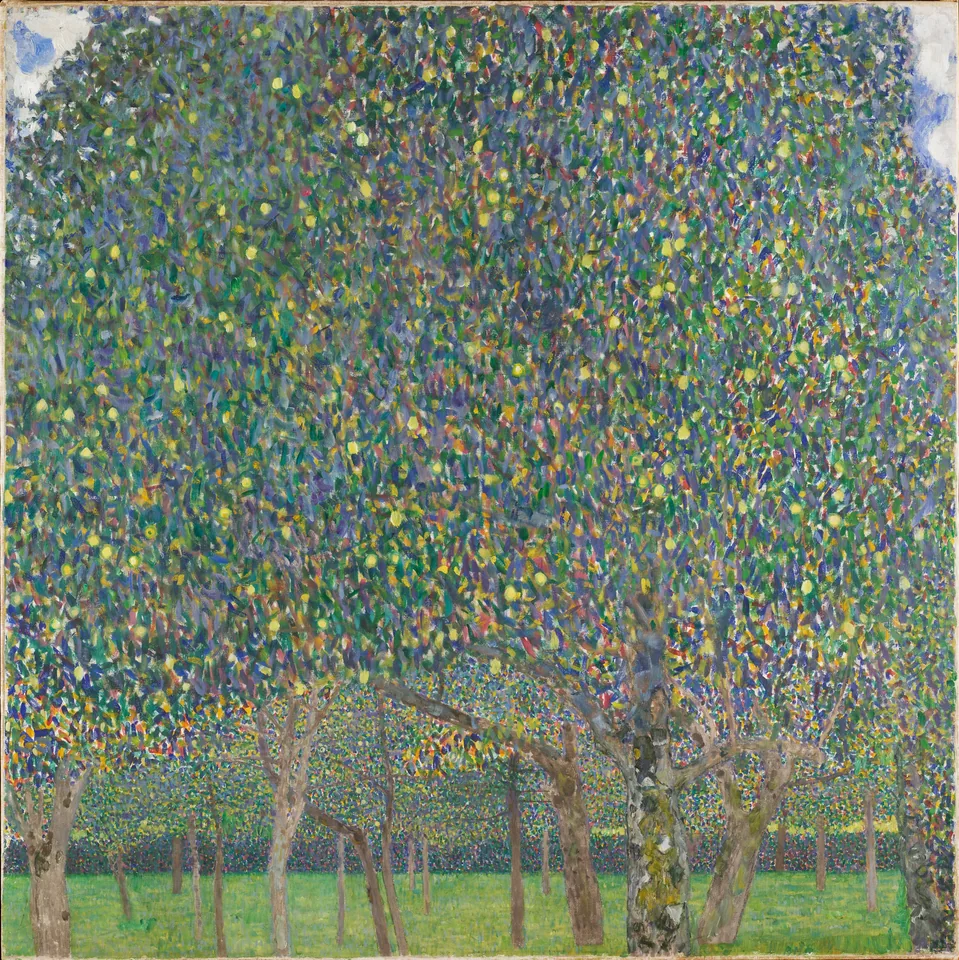
Schönbrunn Landscape by Klimt is a 1916 painting depicting a calm body of water fringed by dense greenery. A broad pond fills the lower half of the composition, reflecting the towering trees and a patch of white cloud against blue sky.
Along the edge of the water, a low wall or hedge runs toward a tall, rounded tree rising beside a stone pedestal. Small human figures stand along a gravel pathway in the distance, including a figure dressed in dark clothing and another with an orange or red accent. Klimt applied dabs of olive, moss, and muted green paint to build the foliage and water, creating a textured surface across the square composition.
In the water reflection at the bottom right, Klimt mirrors the sky with pale cream and soft blue tones. The brushstrokes form a dense pattern across the canvas, balancing the upright wall of foliage against the tranquil water below.
The story behind it
Klimt completed this work in 1916, cataloging it under his late landscapes. The painting is also known by the German title Schönbrunner Landschaft or Schoenbrunn landscape.
During his career, Klimt explored park scenes and natural environments away from his portrait commissions. You can see how this piece fits into his full body of work across our guide to every Klimt painting.
Where to see it
Schönbrunn Landscape is held in a private collection. Because it remains in private hands rather than a public gallery, the painting is not currently on public display.
Questions about Schönbrunn Landscape
When did Klimt paint Schönbrunn Landscape?
Gustav Klimt painted Schönbrunn Landscape in 1916. The work belongs to the late period of his career, when he frequently produced nature scenes and garden views. It is cataloged under landscape paintings from this year, alongside other natural compositions he developed during the final years of his life.
Who owns Schönbrunn Landscape by Klimt?
Schönbrunn Landscape by Klimt is owned by a private collector. Because the painting is part of a private collection, it is not held by a public art museum or gallery. Works in private hands are typically not available for regular viewing by the public, unless loaned for a special art exhibition.