Klimt Frieze Prints: Beethoven and Stoclet
The Beethoven Frieze is Gustav Klimt's monumental wall cycle painted for the 1902 Vienna Secession exhibition. Our prints capture its dramatic narrative scenes and the golden mosaics of the Stoclet Frieze for your home.
About Klimt’s friezes
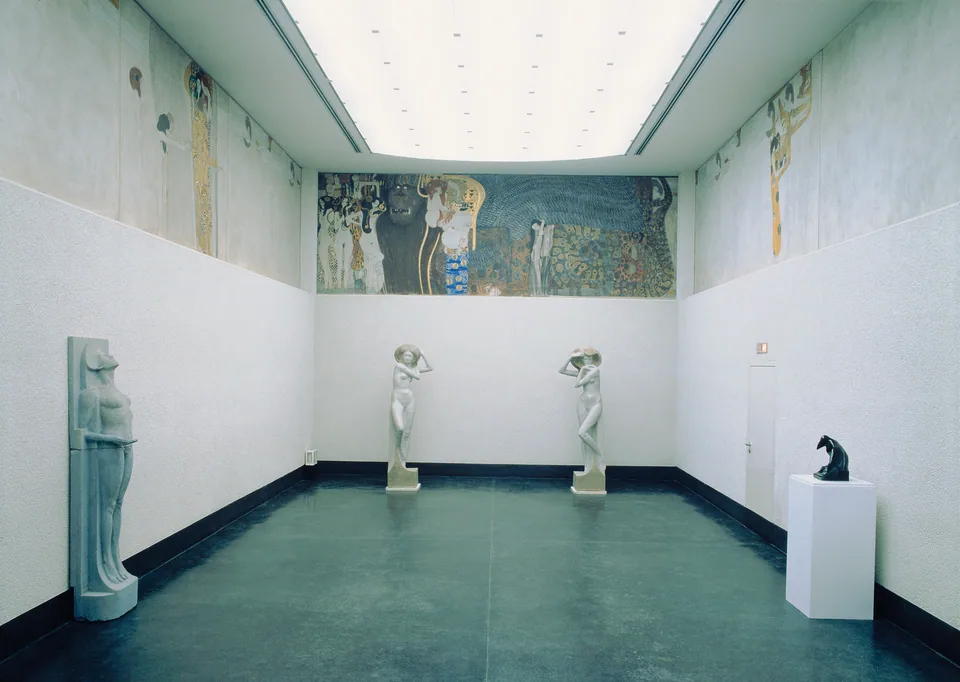
Gustav Klimt painted the Beethoven Frieze in 1901 or 1902 for the Fourteenth Vienna Secession exhibition. Staged around Max Klinger’s sculpture of Ludwig van Beethoven, the installation celebrated the composer through a total work of art. Klimt painted his allegorical cycle directly onto untreated plaster using casein paint, chalk, graphite, and gold leaf. The frieze measures 2.15 meters high, spans 34.14 meters across three walls in a U-shape, and weighs four tons.
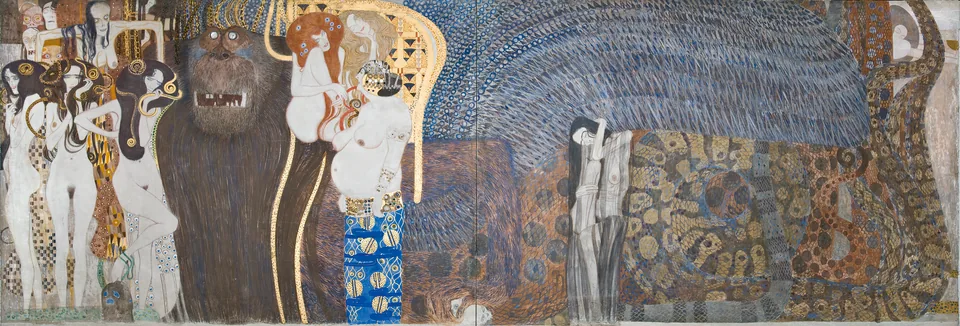
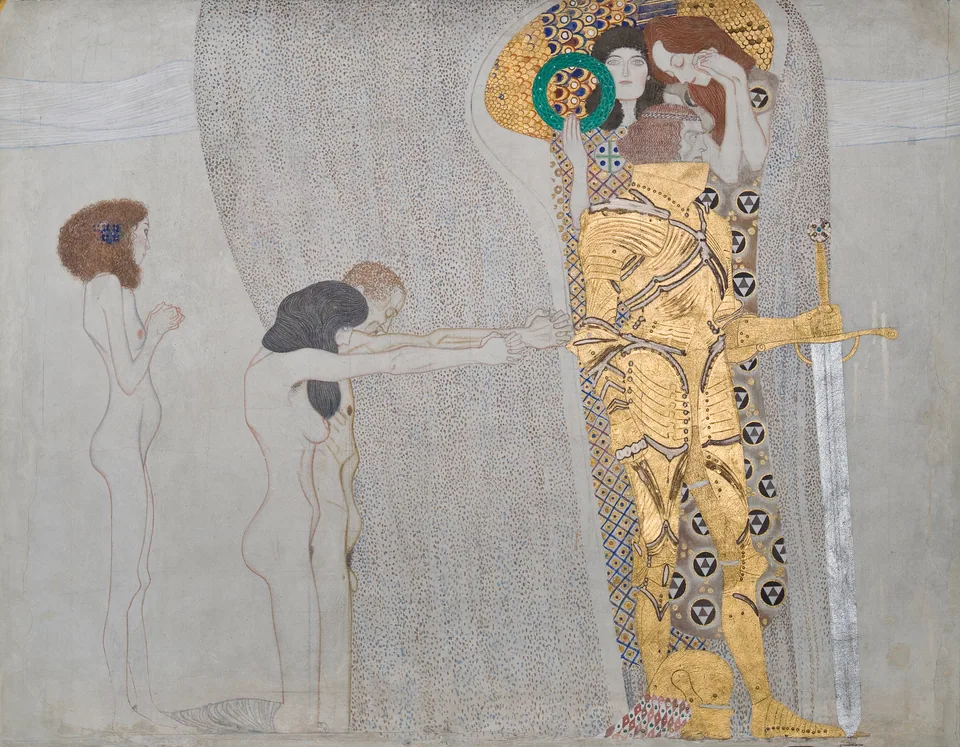
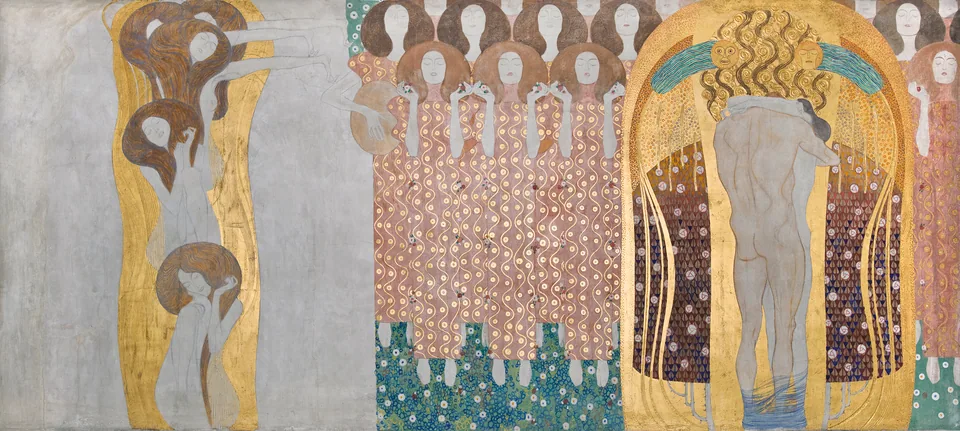
The narrative follows Richard Wagner’s reading of Beethoven’s Ninth Symphony. On the left wall, suffering figures plead with a golden knight to fight for human happiness. The central wall displays hostile forces, including the ape-like monster Typhoeus, the three Gorgons, and figures representing Sickness, Madness, Death, and Grief. On the right wall, the struggle ends in Poetry, a choir of angels, and an embracing couple celebrating joy.
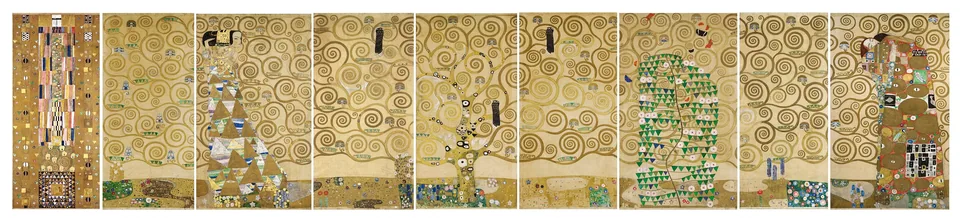
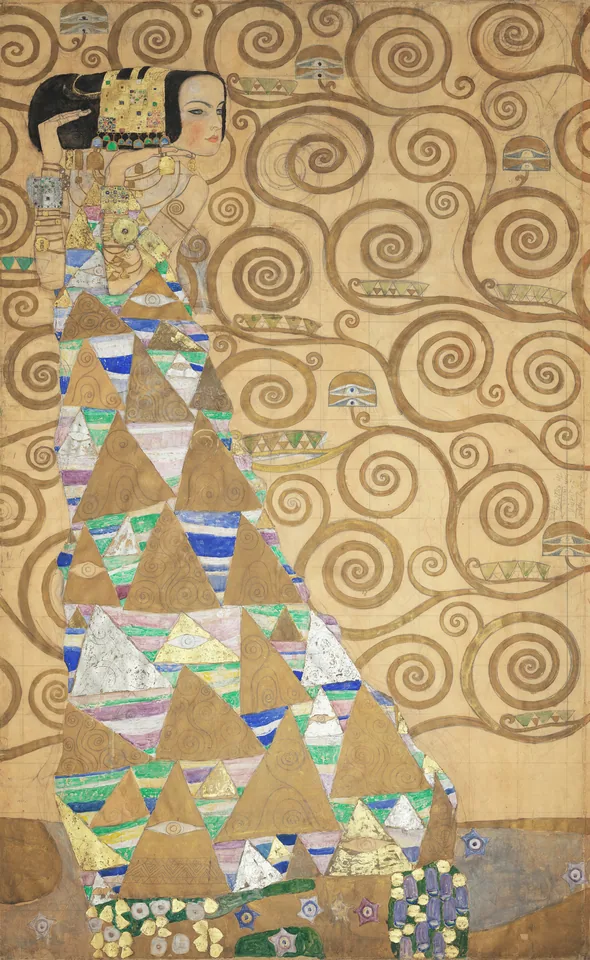
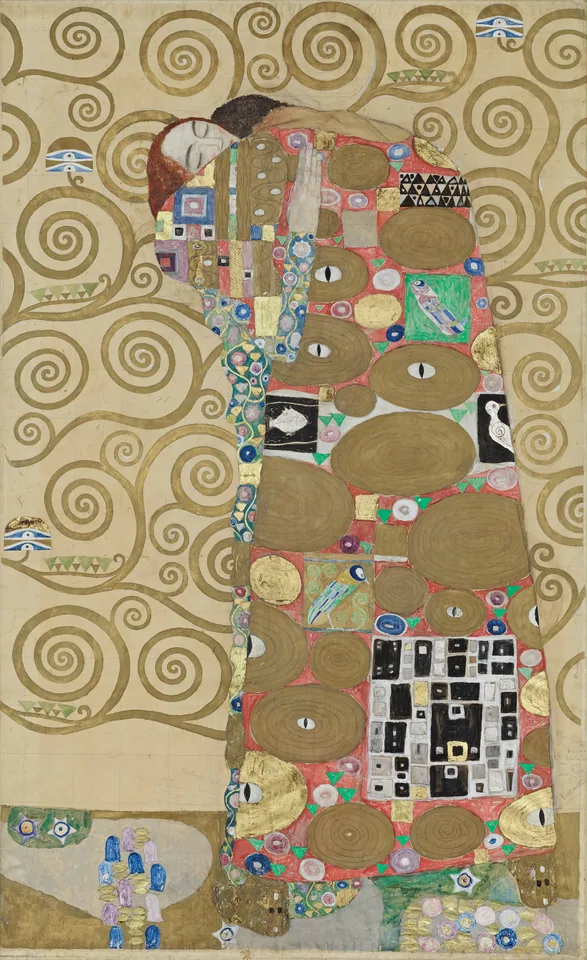
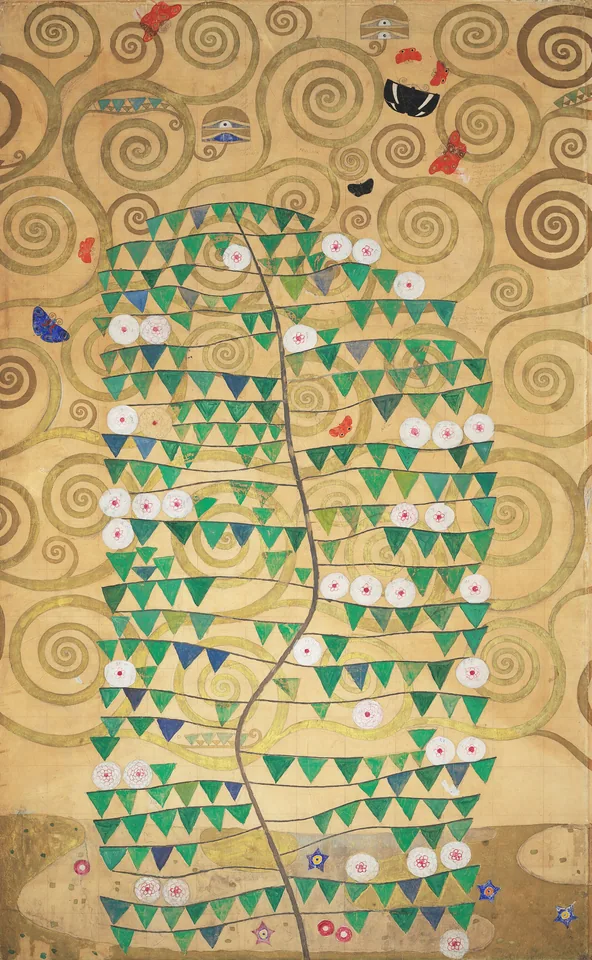
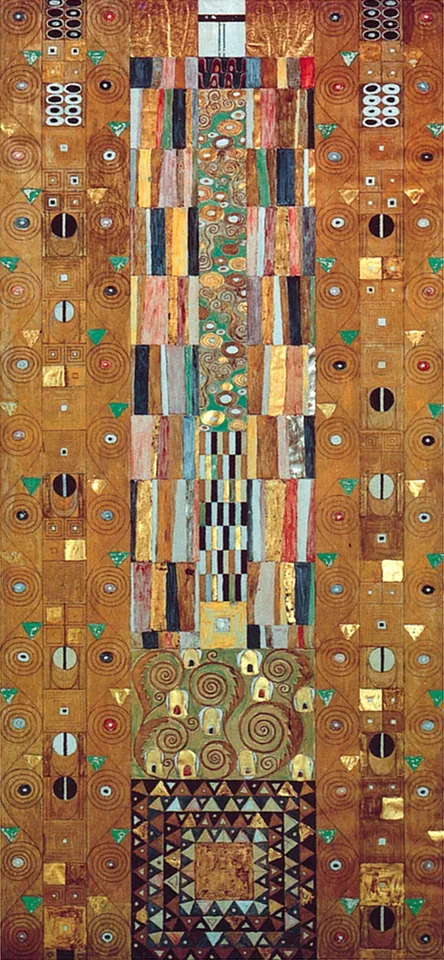
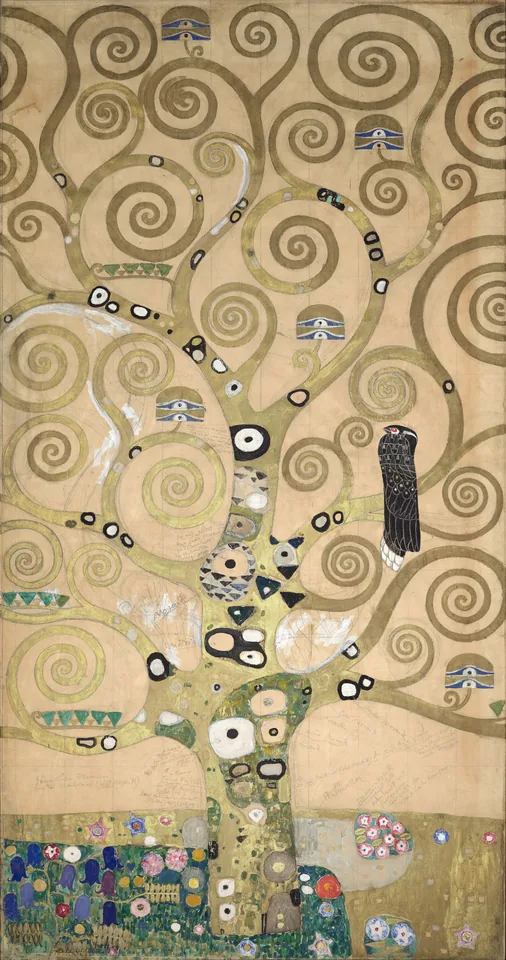
Klimt designed his other celebrated wall cycle, the Stoclet Frieze, between 1905 and 1911 for the Palais Stoclet in Brussels. Belgian financier Adolphe Stoclet and his wife Suzanne commissioned architect Josef Hoffmann to build the private mansion. For the dining room, Klimt created a three-part mosaic cycle showing the swirling Tree of Life, a female figure representing Expectation, and an embracing couple representing Fulfilment. A smaller panel with a geometric Golden Knight stands on the short wall between them. Leopold Forstner’s workshop executed the murals using marble, gilded tiles, enamel, ceramics, pearls, and semi-precious stones.
Choosing a frieze print
Because Klimt’s original friezes extend across entire rooms, an art print presents a single panel or an isolated detail from the broader scheme. You can choose focal points such as the spiral branches of the Tree of Life, the standing dancer of Expectation, or the knight in gold armor. These wide compositions bring strong horizontal lines to your space, making them natural centerpieces above dining sideboards, desks, or living room seating.
Every reproduction is printed and shipped by ArtsyWall in three formats: Premium Canvas, Framed Canvas, and Archival Paper. Archival Paper highlights the pale plaster grounds, graphite outlines, and matte pigments of Klimt’s painted surfaces. Framed Canvas and Premium Canvas emphasize the solid forms and decorative patterns inspired by mosaic tesserae and gold leaf. Consider your wall space and lighting to decide which surface best balances Klimt’s ornamental figures.
Questions and answers
Where is the Beethoven Frieze?
The Beethoven Frieze is located in the Secession Building in Vienna, Austria. It is displayed in a dedicated, climate-controlled basement room created for the artwork in 1985. The Österreichische Galerie Belvedere owns the frieze and placed it on permanent loan at the Secession, where it has been open to public view since 1986. Before this installation, the Austrian state restored the panels over a ten-year period.
Where is Klimt's Tree of Life?
Klimt's finished Tree of Life mosaic is installed in the dining room of the Stoclet Palace in Brussels, Belgium. Because the Stoclet Palace is a private residence, the mosaic is not open to visitors. However, Klimt's original full-scale working cartoon for the Tree of Life is preserved in Vienna. You can view this painted preparatory drawing in the Museum of Applied Arts (MAK), where it hangs in the study collection.
How long is the Beethoven Frieze?
The Beethoven Frieze spans a width of 34.14 meters, or approximately 34 meters according to German records. Gustav Klimt painted the cycle 2.15 meters high across three walls in a U-shape configuration. The total structure weighs four tons. Klimt applied light materials, including casein paint, chalk, and gold leaf, directly onto untreated plaster for a temporary Secession exhibition in 1902.
Can you visit the Stoclet Palace?
The Stoclet Palace is privately owned by the Stoclet family and has never been open to the public. The mansion has remained closed to visitors since its completion in 1911. In 2024, the Brussels Parliament approved a motion mandating that the palace open to the public for at most 15 days each year. Until those arrangements take effect, travelers cannot enter the building to see Klimt's mosaics in person.