Select the painting to see it full screen and zoom in.
What the painting shows
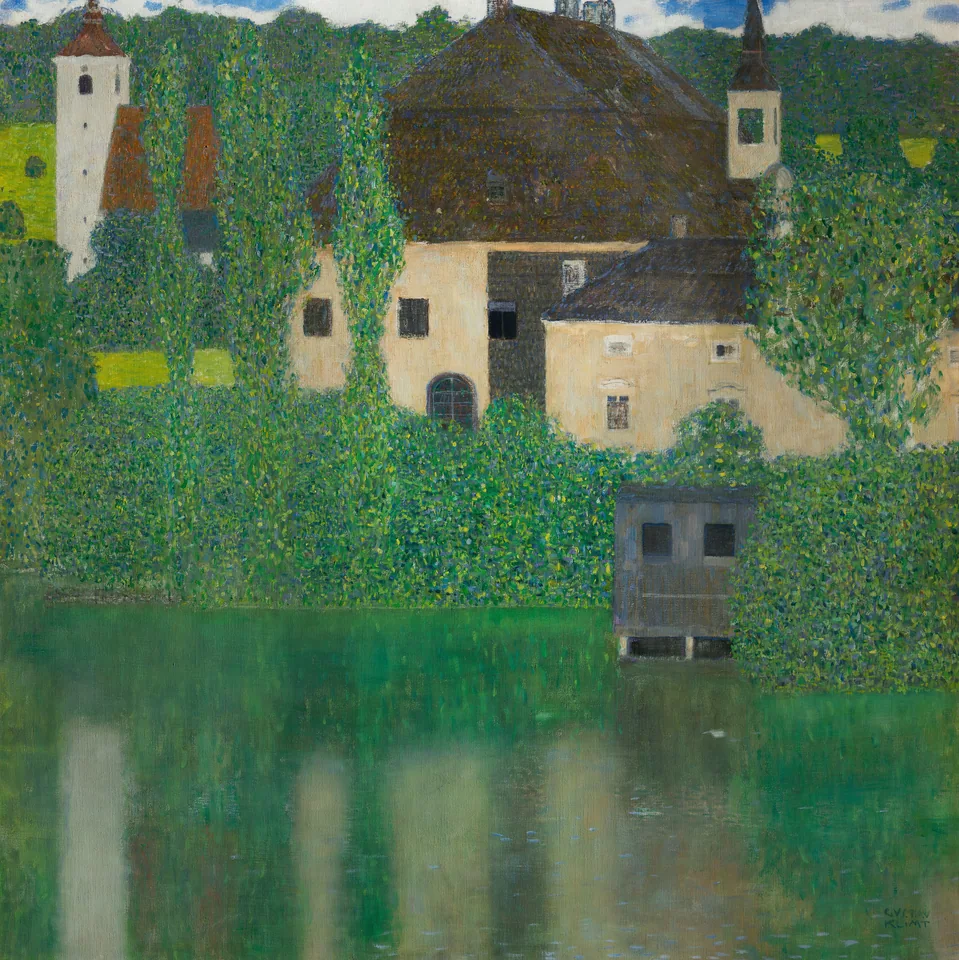
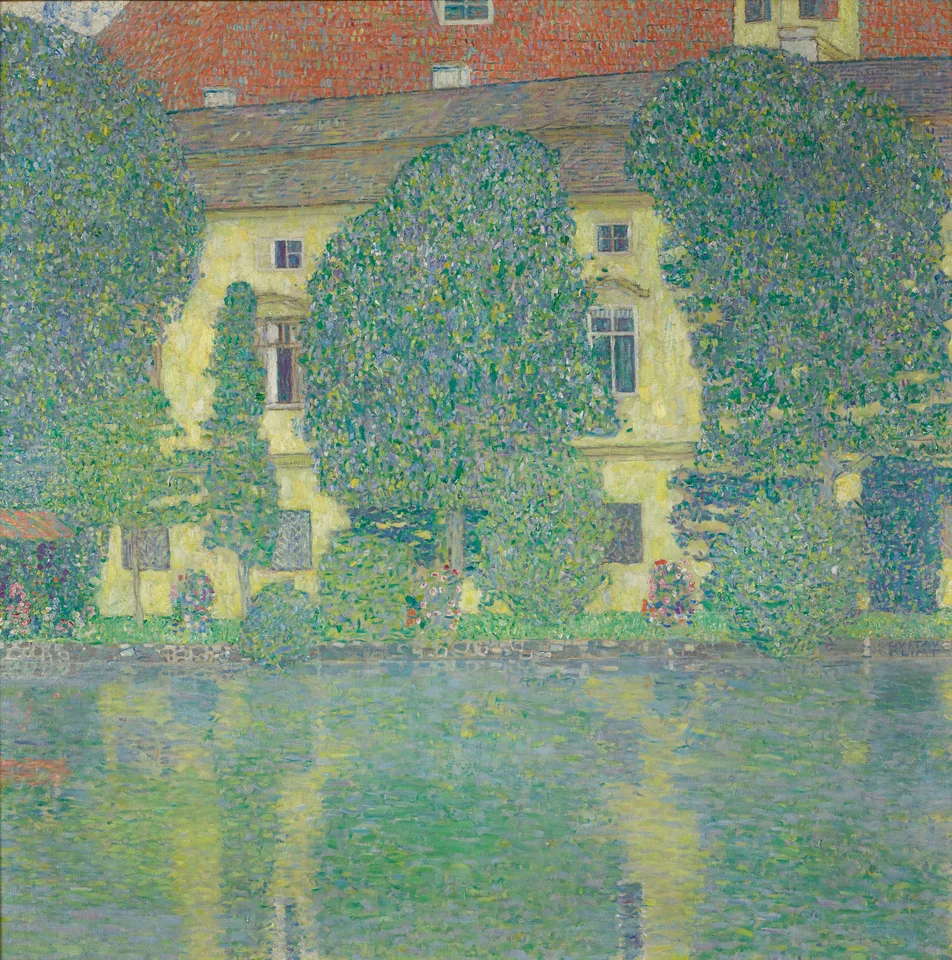
Houses at Unterach on the Attersee by Klimt depicts several buildings clustered on a green hillside rising directly from the water’s edge. At the bottom, a strip of calm water reflects the warm hues of the shoreline, anchored by a small boathouse. Above it, homes with white and reddish-orange facades sit tightly framed among dense green treetops and hillside foliage.
A large white building crowns the upper portion of the canvas beneath a soft roofline. Klimt applied paint in textured, mosaic-like dabs across the foliage and slopes, flattening the perspective into a rich pattern. The compact grouping forms one of the notable lakeside scenes within his broader landscapes.
The story behind it
Klimt painted the work in 1916 under the German title Häuser in Unterach am Attersee. It belongs to the group of lakeside works discussed in the guide to Klimt’s landscapes and the Attersee. During his summer retreats to the lake, Klimt repeatedly focused on local architecture embedded in surrounding vegetation, capturing rural structures through square, geometric compositions.
Where to see it
Houses at Unterach on the Attersee is in a private collection and is not on public exhibition in a museum gallery. The painting appeared on the public market in November 2006, when it was sold at a Christie’s auction to an anonymous private buyer following a restitution process.
Questions about Houses at Unterach on the Attersee
When did Klimt paint Houses at Unterach on the Attersee?
Gustav Klimt painted Houses at Unterach on the Attersee in 1916. The work belongs to his series of summer landscapes painted at the Attersee lake in Austria. Some catalog records date the oil painting to circa 1916, placing it late in his career before his death in 1918.
Who owns Houses at Unterach on the Attersee by Klimt?
Houses at Unterach on the Attersee by Klimt is held in a private collection. The painting was acquired by a private collector at a Christie's auction in November 2006, after having been subject to restitution. It is not currently on public display in a museum.