Select the painting to see it full screen and zoom in.
What the painting shows
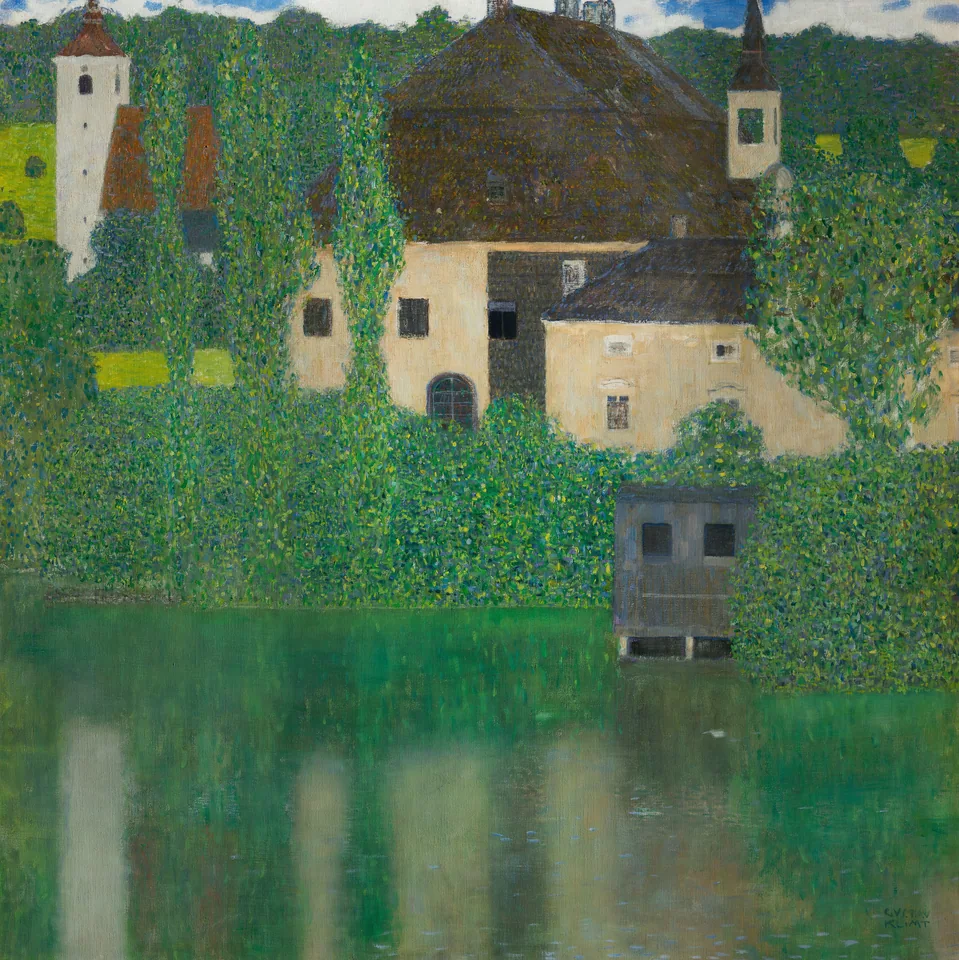
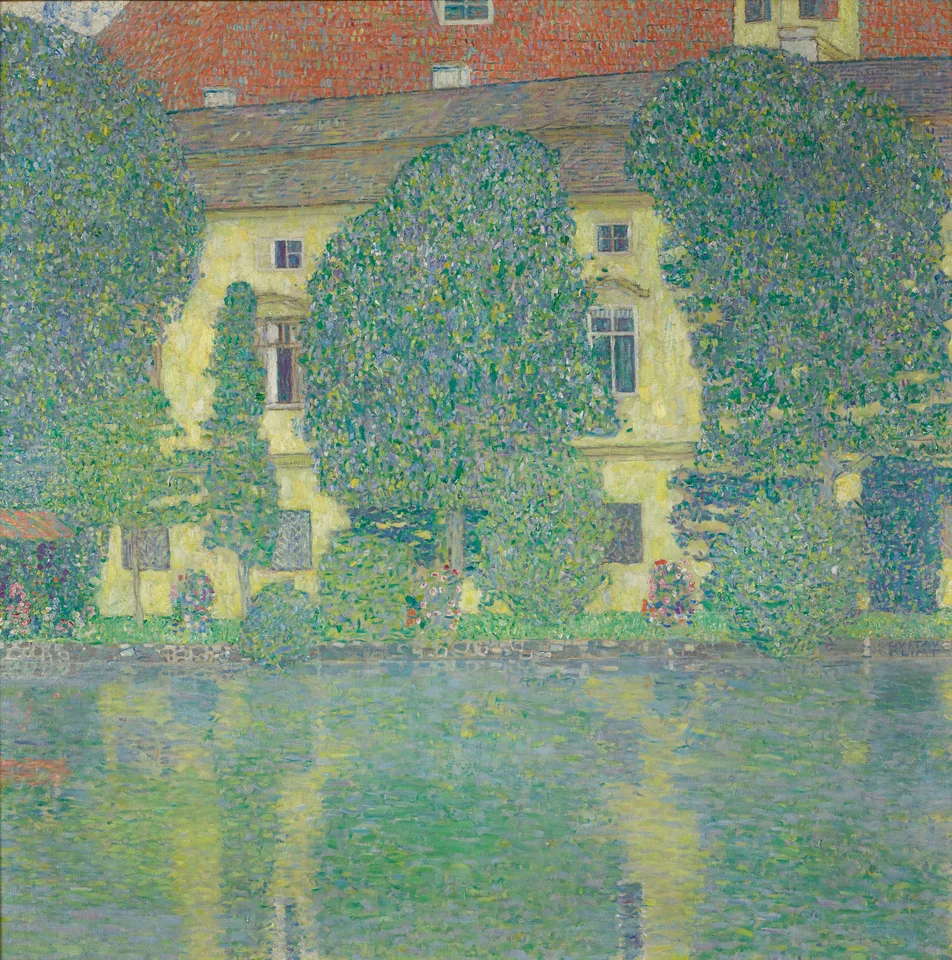
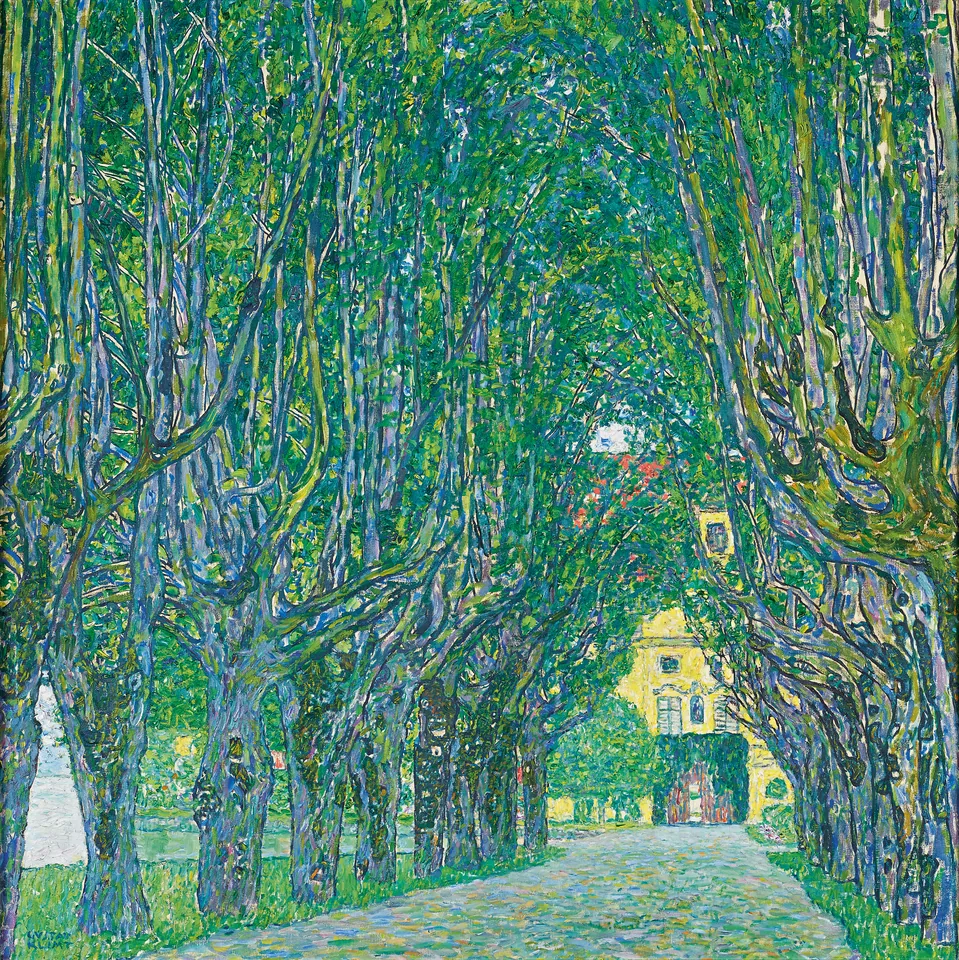
Church in Unterach on the Attersee by Klimt presents a lakeside village arranged in flat, layered patterns. A white church tower with a reddish rounded dome rises near the top of the canvas, flanked by deep green and golden-yellow foliage. Below the church, village houses with tiled roofs cluster closely around dense rounded trees and small lakeside boathouses.
The lower third of the canvas features the surface of Lake Attersee. Klimt built the water out of small horizontal dashes of turquoise, deep green, brown, and pale yellow, capturing the reflections of the buildings and shore. There is no visible sky or open horizon, which gives the scene a compact, decorative appearance.
The story behind it
Klimt painted the work in 1916 using oil on canvas. It belongs to the broader group of landscapes he created late in his career. The picture is also cataloged under the alternative titles Church in Unterach and Kirche in Unterach am Attersee.
The artwork forms part of the notable group of paintings created during visits to the lake region. Art historians study these works as key examples of Klimt’s landscapes and the Attersee, where he focused on village architecture and lake shorelines.
Where to see it
Church in Unterach on the Attersee is held in a private collection. Because it belongs to a private collector, it is not on regular display in a public gallery or museum.
Questions about Church in Unterach on the Attersee
When did Klimt paint Church in Unterach on the Attersee?
Gustav Klimt painted Church in Unterach on the Attersee in 1916. The artwork is an oil on canvas piece that belongs to his group of landscapes painted at the Attersee in Austria. It is now held in a private collection rather than on public display in a museum.
Who owns Church in Unterach on the Attersee by Klimt?
Church in Unterach on the Attersee by Gustav Klimt is currently owned by a private collector. Because the 1916 oil painting remains in a private collection, it is not on regular public view in an art gallery or permanent museum collection.